How to Learn Generative AI From Scratch: Beginner's Guide
- What Is Generative AI?
- Why Should You Learn Generative AI?
- Can You Learn Generative AI Without Coding?
- How To Learn Generative AI From Scratch: Step-by-Step Roadmap
- Step 1: Understand Artificial Intelligence Fundamentals
- Step 2: Learn How Generative AI Models Work
- Step 3: Practice With Generative AI Tools
- Step 4: Learn Prompt Engineering
- Step 5: Learn Basic Python Programming
- Step 6: Learn Basic Data and Mathematics Concepts
- Step 7: Explore Large Language Models (LLMs)
- Step 8: Learn APIs and AI Application Development
- Step 9: Explore RAG and AI Agents
- Step 10: Build Real-World Generative AI Projects
- Essential Skills Required to Learn Generative AI
- Best Free Resources to Learn Generative AI
- Google Generative AI Learning Path
- Microsoft Generative AI for Beginners
- Microsoft Learn
- Google AI Essentials
- Best Generative AI Tools for Beginners
- Generative AI Projects for Beginners
- AI Content Assistant
- Document Summarizer
- AI Study Assistant
- FAQ Chatbot
- How Long Does It Take to Learn Generative AI?
- Career Opportunities After Learning Generative AI
- How to Use Generative AI in Digital Marketing
- Common Mistakes to Avoid When Learning Generative AI
- Conclusion:
Generative Artificial Intelligence (Generative AI) is transforming how people create content, write software, analyze information, design images, and solve business problems. From AI-powered chatbots to image generators and coding assistants, this technology is becoming increasingly useful across industries.
If you are wondering how to learn Generative AI from scratch, the good news is that you do not need an advanced technical background to begin. Students, digital marketers, business professionals, developers, and entrepreneurs can all start learning through practical exercises and structured courses.
The right learning path depends on your goals. Some learners want to use AI tools to improve productivity, while others want to build AI applications using Python, APIs, and large language models (LLMs).
This guide explains the essential skills, learning roadmap, free resources, beginner projects, career opportunities, and practical steps you can follow to develop your Generative AI knowledge.
What Is Generative AI?
Generative AI is a branch of artificial intelligence that uses trained models to generate new content, including text, images, audio, video, and computer code. These systems learn patterns from training data and use those patterns to produce responses to user instructions.
For example, a generative AI tool can help draft an email, summarize a report, generate a marketing image, or explain a programming concept.
Popular applications include conversational AI assistants, text-to-image generators, coding assistants, and document-analysis tools. Their capabilities vary, and their outputs may contain errors, so human review remains important.
Why Should You Learn Generative AI?
Learning Generative AI can help you improve productivity, explore new career opportunities, and develop practical problem-solving skills. Businesses are experimenting with AI to support customer service, software development, research, marketing, and internal workflows.
Some key reasons to learn it include:
- Automating repetitive tasks.
- Creating and improving content.
- Analyzing information more efficiently.
- Developing AI-powered applications.
- Improving existing professional skills.
- Exploring opportunities in AI-related roles.
The greatest benefit comes from learning how to apply AI responsibly to real problems rather than simply learning the names of different tools.
Can You Learn Generative AI Without Coding?
Yes. You can begin using Generative AI without programming experience. Many tools provide conversational interfaces that allow users to create content, summarize documents, generate ideas, and perform other tasks through written instructions.
However, coding becomes increasingly important if you want to develop AI applications, integrate models into software, work with APIs, or customize technical solutions.
|
Learning goal |
Is coding required? |
|
Using AI chatbots |
No |
|
Prompt engineering |
Not usually |
|
AI-assisted content creation |
No |
|
Business workflow automation |
Depends on the tools |
|
Building AI applications |
Usually helpful |
|
Training or fine-tuning models |
Advanced technical skills required |
Choose your learning path based on what you want to accomplish.
How To Learn Generative AI From Scratch: Step-by-Step Roadmap
The most effective approach is to move from basic concepts to practical applications. Start by understanding the technology, practice using AI tools, and gradually explore more advanced topics as your goals become clearer.
Step 1: Understand Artificial Intelligence Fundamentals
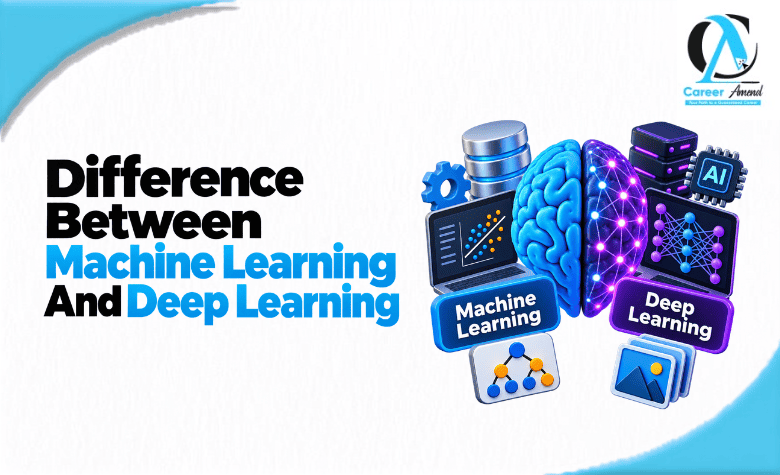
Begin by learning the difference between artificial intelligence, machine learning, deep learning, and Generative AI. These terms are related, but they describe different concepts.
Artificial intelligence is the broader field of creating systems that perform tasks associated with human intelligence. Machine learning allows systems to learn patterns from data, while deep learning uses multilayer neural networks. Generative AI focuses on producing new content based on learned patterns.
Understanding these relationships will help you follow tutorials and recognize which skills you need to learn next.
Step 2: Learn How Generative AI Models Work
Once you understand the basics, explore how generative models create content. Start with large language models, which process text and generate responses based on patterns learned during training.
Learn basic concepts such as tokens, context windows, model training, inference, embeddings, and hallucinations. You do not need to master the underlying mathematics immediately.
The goal is to understand what AI models can do, why their responses sometimes fail, and how to evaluate their outputs before relying on them.
Step 3: Practice With Generative AI Tools
Choose one conversational AI assistant and practice using it regularly. Experiment with writing, summarization, research assistance, brainstorming, data interpretation, and content improvement.
Try giving the same task different instructions and compare the results. Observe how context, constraints, examples, and output formats influence the response.
Keep a record of your best prompts and the problems you encounter. This simple habit helps you learn faster and understand when AI is useful, when it needs human guidance, and when another tool would be more appropriate.
Step 4: Learn Prompt Engineering
Prompt engineering is the practice of designing instructions that help an AI system produce more useful outputs. A good prompt explains the task, provides context, specifies constraints, and describes the desired result.
For example, instead of asking an AI tool to write a blog, provide the audience, topic, primary keyword, word count, tone, headings, and factual requirements.
Practice role-based instructions, examples, structured output, and iterative refinement. Also learn to check generated facts independently. Effective prompting improves results, but it cannot guarantee that every response will be accurate.
Step 5: Learn Basic Python Programming
If your goal is to build AI applications, learning Python is a useful next step. Python is widely used for data analysis, machine learning, automation, and AI development.
Start with variables, data types, lists, dictionaries, loops, conditional statements, functions, modules, and error handling. Then learn how to install packages, work with files, and use notebooks.
Practice by writing small programs before attempting complex AI projects. If you only want to use AI tools for marketing or general productivity, you can postpone programming until you need it.
Step 6: Learn Basic Data and Mathematics Concepts
Technical learners should develop a working understanding of data, probability, statistics, and linear algebra. These subjects become more important when studying machine learning, evaluating models, or training and fine-tuning AI systems.
Begin with averages, distributions, correlation, probability, vectors, matrices, and basic statistical reasoning. Practice reading datasets and interpreting charts.
You do not need to master every mathematical topic before using Generative AI. Learn concepts progressively as they become relevant to your projects.
Step 7: Explore Large Language Models (LLMs)
Large language models power many modern text-based AI applications. Learning how they work will help you move beyond basic prompting toward application development.
Explore model inputs and outputs, token limits, system instructions, temperature settings where available, and the differences between hosted and open-weight models. Understand that models differ in cost, speed, capabilities, and data-handling arrangements.
Next, learn how applications send requests to models and process responses. Use official documentation and beginner tutorials to understand these workflows before building applications that handle sensitive or business-critical information.
Step 8: Learn APIs and AI Application Development
An application programming interface (API) allows software to communicate with an AI model or service. Learning APIs helps developers connect Generative AI capabilities to websites, applications, and automated workflows.
Start with HTTP requests, JSON, authentication, environment variables, and error handling. Then follow an official tutorial to build a small application that sends a prompt to a model and displays the response.
Protect API keys, monitor usage costs, and avoid exposing credentials in public code repositories. Begin with a simple text-generation application before exploring more complex integrations.
Step 9: Explore RAG and AI Agents
After learning basic AI application development, explore retrieval-augmented generation (RAG). RAG systems retrieve relevant information from external documents or databases and provide it to a model as context for answering questions.
AI agents are systems that can use tools and perform multi-step tasks with varying degrees of autonomy. Their behavior and reliability depend on how they are designed.
Start with a document-question-answering prototype, then explore tool calling and controlled workflows. Learn to evaluate accuracy, permissions, security, and failure cases before allowing an AI system to take consequential actions.
Step 10: Build Real-World Generative AI Projects
Projects turn theoretical knowledge into practical experience. Choose a problem you understand and build a small solution that demonstrates a useful application of Generative AI.
For beginners, a content assistant, document summarizer, study helper, or frequently asked questions chatbot can be a good starting point. Technical learners can extend these projects with APIs, document retrieval, or structured data.
Document your objectives, tools, implementation, testing process, limitations, and results. A clear project portfolio can help demonstrate your skills to employers, clients, or collaborators.
Essential Skills Required to Learn Generative AI
The skills you need depend on whether you want to use AI tools professionally or develop AI-powered systems. Both paths benefit from curiosity, critical thinking, and a willingness to experiment.
|
Skill |
Why it matters |
|
AI fundamentals |
Helps you understand capabilities and limitations |
|
Prompt engineering |
Improves the quality of instructions |
|
Critical thinking |
Helps verify AI-generated information |
|
Python |
Supports application and model development |
|
Data literacy |
Helps interpret and prepare information |
|
API integration |
Connects AI models with applications |
|
Communication |
Helps define problems and explain results |
|
Responsible AI |
Supports privacy, safety, and fair use |
You can develop these skills progressively instead of trying to learn everything at once.
Best Free Resources to Learn Generative AI
Several established educational resources provide beginner-friendly introductions and practical learning materials. Check each provider's current access conditions because course features and availability can change.
Google Generative AI Learning Path
Google Cloud's Introduction to Generative AI learning path introduces generative AI concepts, large language models, and responsible AI principles. It is a useful starting point for learners who want a structured overview. <Cite refs={["turn583915search0"]}/>
Microsoft Generative AI for Beginners
Microsoft's Generative AI for Beginners provides a structured collection of lessons covering prompts, LLMs, chat applications, retrieval, and other development topics. It is particularly useful for learners interested in building AI applications. <Cite refs={["turn583915search6"]}/>
Microsoft Learn
The Microsoft Learn Generative AI module introduces generative AI, LLMs, prompts, and AI agents. It can help beginners establish a technical foundation before moving to more advanced topics. <Cite refs={["turn583915search7"]}/>
Google AI Essentials
Google AI Essentials is designed for people who want to use AI tools to improve workplace productivity. Its curriculum includes prompting, practical AI use, and responsible use, without requiring previous technical experience. <Cite refs={["turn583915search10"]}/>
Best Generative AI Tools for Beginners
Choose tools according to the task you want to complete. You do not need to learn every available product to become proficient.
|
Tool category |
Typical use |
|
AI chat assistants |
Writing, brainstorming, explanations |
|
Image generators |
Creating visual concepts and illustrations |
|
Coding assistants |
Understanding and generating code |
|
AI research tools |
Exploring sources and summarizing information |
|
Automation platforms |
Connecting tasks and applications |
|
Development frameworks |
Building custom AI-powered applications |
Before using any tool, check its privacy policy, usage limits, licensing terms, and suitability for your intended task. Features may differ between free and paid plans.
Generative AI Projects for Beginners
Start with a project that solves one clear problem. Small projects are easier to test, improve, and explain than ambitious applications with too many features.
AI Content Assistant
Create a workflow that generates blog outlines, social media captions, and content briefs from a topic and audience description. Add human editing and fact-checking before publishing.
Document Summarizer
Build a tool that summarizes a document into key points, important dates, and action items. Check whether the summary accurately represents the original source.
AI Study Assistant
Create a study helper that explains difficult concepts, generates practice questions, and produces revision notes. Verify answers against reliable educational material.
FAQ Chatbot
Develop a chatbot that answers common questions using a defined collection of documents. A more advanced version can use RAG to retrieve relevant passages before generating a response.
How Long Does It Take to Learn Generative AI?
Your learning timeline depends on your background, available study time, and target skill level. Learning to use AI tools requires less technical preparation than developing production-ready AI applications.
|
Learning stage |
Illustrative time estimate |
|
AI fundamentals |
1–2 weeks |
|
Prompting and tool practice |
1–3 weeks |
|
Basic Python, if needed |
4–8 weeks |
|
API-based applications |
2–6 additional weeks |
|
Advanced projects and evaluation |
Ongoing practice |
These are planning estimates, not guarantees. Someone studying part-time may need longer, while an experienced developer may progress faster.
Career Opportunities After Learning Generative AI
Generative AI skills can complement existing expertise or support a transition into technical roles. Career opportunities depend on your practical ability, previous experience, portfolio, and the requirements of individual employers.
Potential paths include:
- Generative AI application developer.
- AI automation specialist.
- Machine learning engineer.
- AI product specialist.
- Prompt-focused content or workflow specialist.
- AI solutions consultant.
- Data analyst using AI tools.
- AI-enabled digital marketing specialist.
Technical roles often require programming, software engineering, data skills, or machine learning knowledge. Non-technical roles can benefit from AI literacy, effective prompting, workflow design, and the ability to evaluate outputs responsibly.
How to Use Generative AI in Digital Marketing
Digital marketers can use Generative AI to support keyword clustering, content briefs, ad copy variations, campaign ideas, audience research, and reporting. These tools can accelerate repetitive tasks and help teams explore alternative approaches.
For example, a marketer can use AI to draft social media variations for different audiences or summarize campaign data before conducting a deeper analysis. However, keyword demand, factual claims, brand voice, and campaign performance should be validated using appropriate tools and evidence.
AI should support strategic thinking rather than replace editorial judgment, original research, customer understanding, or performance measurement.
Common Mistakes to Avoid When Learning Generative AI
Many beginners make faster progress when they focus on practical learning instead of chasing every new tool or trend.
Avoid these common mistakes:
- Trying to learn every AI platform at once.
- Copying prompts without understanding their purpose.
- Assuming AI-generated answers are always correct.
- Skipping practical exercises and projects.
- Learning advanced frameworks before mastering fundamentals.
- Uploading confidential information without authorization.
- Ignoring model costs, security, and usage limits.
- Collecting certificates without demonstrating practical skills.
Choose one learning goal, practice consistently, and review what worked. A small portfolio of well-tested projects is more useful than a collection of unfinished tutorials.
Conclusion:
Learning Generative AI from scratch becomes manageable when you follow a structured roadmap and practice consistently. Begin with the fundamentals, experiment with AI tools, improve your prompting skills, and build small projects that solve real problems.
If your goal is to use AI in marketing, education, business, or everyday work, focus first on practical applications and responsible use. If you want to develop AI-powered software, continue with Python, APIs, LLMs, data handling, and application testing.
You do not need to master every technology immediately. Choose one goal, learn the skills required for it, and build your knowledge through practical experience. With consistent effort, you can develop useful Generative AI skills and apply them to your studies, work, or future career.